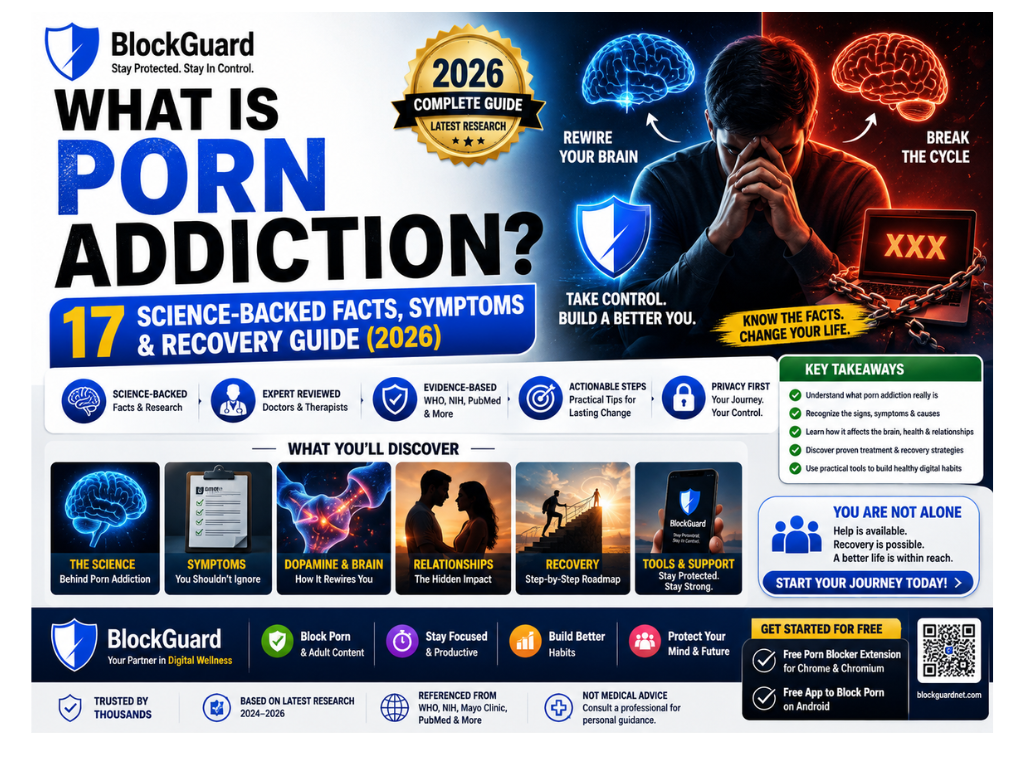
1. What Is Porn Addiction? A Clear Definition {#what-is-porn-addiction}
Porn addiction is a behavioral pattern characterized by an inability to control pornography use despite negative consequences in important areas of life, including work, relationships, and mental health. While not officially classified as an addiction in the DSM-5, problematic pornography use (PPU) is recognized as a significant clinical issue affecting up to 10% of users .
2. Is Porn Addiction a Real Medical Condition? {#is-porn-addiction-real}
Yes, but the terminology matters. Porn addiction is not an official diagnosis in the DSM-5, but the World Health Organization (WHO) includes Compulsive Sexual Behavior Disorder (CSBD) in the ICD-11, which can encompass problematic pornography use .
The Medical Consensus
The current medical understanding is nuanced:
- Not in the DSM-5: The American Psychiatric Association does not recognize “porn addiction” as a formal diagnosis .
- Recognized in ICD-11: The WHO includes CSBD as a diagnosable condition .
- Problematic Pornography Use (PPU): This term describes the clinical phenomenon of impaired control over pornography use despite negative consequences .
Why This Distinction Matters
The debate among experts continues. Some argue that problematic pornography use fits best within the addiction framework, while others see it as part of a broader compulsive sexual behavior disorder . The ICD-11 classification of CSBD has been called a “great step forward” that is expected to “greatly improve treatment access and stimulate further research” .
Key Takeaway: Porn addiction is a clinically significant condition, even if the terminology varies. The core issue is impaired control over behavior despite negative consequences.
3. Porn Addiction Symptoms and Signs {#porn-addiction-symptoms}
Core Symptoms Checklist
According to the WHO’s ICD-11 criteria for CSBD and clinical research, key symptoms include :
Loss of Control
- Repeated failed attempts to reduce or stop pornography use
- Spending more time on pornography than intended
- Feeling unable to control sexual impulses
Negative Consequences
- Continued use despite problems in work, relationships, or health
- Neglecting responsibilities at work, school, or home
- Using pornography despite it causing relationship difficulties
Distress and Impairment
- Marked distress about pornography use
- Significant functional impairment in personal, family, or social areas
- Symptoms present for 6 months or more
Self-Assessment Questions
If you’re wondering whether your pornography use is problematic, consider these questions :
- Do you spend hours viewing pornography and feel unsatisfied?
- Have you lost interest in sex with a real partner?
- Do you prefer pornography to intimacy with a partner?
- Do you view pornography when you should be working or with family?
- Do you feel irritable or anxious when you’re not online?
- Have you tried to stop and failed?
Important Note: Distress that is “entirely related to moral judgments and disapproval” about pornography use does not meet the ICD-11 criteria for CSBD . The distress must stem from negative life consequences, not just guilt.
Warning Signs Checklist
Behavioral Signs
- Using pornography for longer periods than intended
- Watching pornography during work or other inappropriate times
- Canceling social plans to view pornography
- Lying about pornography use
- Using pornography to cope with negative emotions
Physical Signs
- Sexual dysfunction with real partners
- Difficulty becoming aroused without pornography
- Loss of sensitivity due to excessive stimulation
Psychological Signs
- Anxiety or depression related to pornography use
- Feelings of shame or guilt
- Withdrawal symptoms when attempting to stop
- Tolerance: needing more extreme content for the same effect
4. What Causes Porn Addiction? {#causes-of-porn-addiction}
The Neurological Driver: The Brain’s Reward System
Porn addiction fundamentally involves the brain’s reward pathway. When you view pornography, the brain releases dopamine—the “feel-good” neurotransmitter associated with pleasure and reward .
The Problem with High-Speed Internet Pornography:
- Unlike traditional erotica, high-speed internet pornography provides endless novelty
- The brain becomes conditioned to this constant stimulation
- Over time, the brain desensitizes to dopamine
- Users need more extreme content to achieve the same effect
The Habit Loop
Behavioral psychology explains how pornography use becomes compulsive:
- Cue (Trigger: stress, boredom, loneliness)
- Routine (Pornography use)
- Reward (Dopamine release, temporary relief)
This is the Cue-Routine-Reward model of habit formation. The behavior becomes a coping mechanism, making it difficult to break .
Risk Factors
Research has identified several risk factors for problematic pornography use :
- Early exposure to pornography during adolescence
- Underlying mental health conditions (depression, anxiety, ADHD)
- Emotion regulation difficulties
- Loneliness and social isolation
- Easy access to high-speed internet pornography
- Trauma history in some cases
The Escalation and Tolerance Mechanism
Users often report progressing to increasingly intense patterns :
- Quantitative escalation: Longer or more frequent sessions
- Qualitative escalation: More extreme or taboo content
- Tab-jumping: Opening multiple browser tabs and cycling through them
- Edging: Delaying climax while scrolling through many stimuli
- Pornographic binges: Hours-long sessions
Expert Note: These patterns reflect “tolerance and escalation” which are also recognized features of substance and behavioral addictions .
5. Dopamine and the Brain Reward System {#dopamine-and-the-brain}
How Pornography Affects the Brain
Pornographic sex engages the brain’s reward system through dopamine release, fueling desire and anticipation, while natural opioids like enkephalins and endorphins drive pleasure and satisfaction .
Key Neurological Changes:
- Dopamine spikes: Create feelings of pleasure and motivation
- Neuroplasticity: Repeated exposure changes the brain’s reward circuitry
- Decreased sensitivity: The brain requires more stimulation
- Craving for novelty: Drives users toward increasingly extreme content
The Seeking Circuit
The brain has a “Seeking circuit” that encourages exploration and curiosity. This circuit:
- Bypasses the thinking circuits in the prefrontal cortex
- Was developed before humans had language
- Is stimulated by visual novelty
- Explains why browsing—not just the content—is addictive
The Wanting vs Liking Problem
A crucial distinction in addiction neuroscience:
- Wanting (dopamine-driven craving) persists
- Liking (opioid-driven pleasure) decreases over time
- This creates a cycle: people want more but enjoy it less
- They search for novel content hoping to recapture initial pleasure
Withdrawal Symptoms
When individuals stop using pornography, they may experience:
- Irritability and anxiety
- Cravings for pornography
- “Flat-lining”: Temporary loss of sexual interest
- Mood disturbances
These symptoms can make recovery difficult and often require professional support.
6. Porn Addiction vs Healthy Sexuality {#porn-vs-healthy-sexuality}
Key Differences
| Aspect | Healthy Sexuality | Problematic Pornography Use |
|---|---|---|
| Control | User chooses when and how | User feels compelled |
| Impact | Enhances wellbeing | Causes distress |
| Function | Supports relationships | Interferes with relationships |
| Frequency | No negative consequences | Consequences despite use |
| Motivation | Positive desires | Escape from negative emotions |
The Spectrum
The International Society for Sexual Medicine emphasizes the need to distinguish:
- High-frequency sexual desire (which can be healthy)
- Compulsive sexual behavior (which involves distress and impairment)
The key is not the frequency but the impact.
Expert Tip: According to clinical guidelines, “It is important to distinguish frequent behavioral engagement from a behavioral pattern that fulfills the criteria for addiction” .
7. Porn Addiction vs Masturbation {#porn-vs-masturbation}
The Distinction Matters
Porn addiction and masturbation are different phenomena:
- Masturbation: A natural sexual activity that is generally healthy
- Problematic pornography use: Using pornography in a way that causes distress and impairment
The Porn-Masturbation-Orgasm Cycle
Problematic pornography use often involves a specific cycle:
- Pornography viewing: Intense visual stimulation
- Masturbation: Physical self-stimulation
- Orgasm: Climax and dopamine release
This cycle is “experienced as highly reinforcing and eventually tied to maladaptive wanting (clinically experienced as craving)” .
Research Caveat
A critical scientific note: Studies on problematic pornography use “commonly do not exclude subjects who masturbate while watching pornography, so the findings are not representative for ‘porn addiction'” . This suggests that masturbation may be a significant component of the phenomenon.
The issue is often not pornography alone but the combination of pornography, masturbation, and the compulsive pattern that develops.
8. How Porn Addiction Affects Mental Health {#mental-health-effects}
Depression and Anxiety
Research shows strong links between problematic pornography use and mental health:
- Depression: PPU is associated with higher depression scores
- Anxiety: Users often report increased anxiety related to their behavior
- Emotion regulation difficulties: Many use pornography to cope with negative emotions
Self-Esteem and Identity
Problematic pornography use can lead to:
- Diminished self-esteem
- Shame and guilt
- Identity confusion: Users may question their sexuality based on what they view
- Social withdrawal: Feelings of shame leading to isolation
The Role of Coping
Research consistently finds that pornography use is often a coping mechanism for:
Clinical Note: Compulsive pornography use is “intricately linked to emotional regulation deficits and avoidance-based coping” .
Cognitive Effects
Users report:
- Reduced concentration
- Decreased motivation
- Difficulty with focus and productivity
- Mental fog after heavy pornography use
9. Porn Addiction and Relationships {#relationships-and-porn}
Impact on Intimacy
Problematic pornography use can significantly affect relationships:
- Decreased intimacy: Users become emotionally detached from partners
- Reduced sexual satisfaction: Real-life sex may feel less satisfying
- Communication breakdown: Secretive behavior damages trust
- Unrealistic expectations: Pornography creates distorted views of sex
The Cycle of Distress
- Secretive use: Hiding pornography consumption
- Guilt and shame: Negative feelings about the behavior
- Emotional distance: Withdrawal from partner
- Increased reliance on porn: Using to cope with relationship stress
- Further damage: The cycle continues
Prevalence
It’s important to note that not all pornography use harms relationships. However, “more than 80% of people with compulsive sexual behavior report excessive or problematic pornography use” .
Warning Signs for Partners
- Partner feels betrayed or disconnected
- Sexual intimacy has decreased significantly
- Partner discovers secretive pornography use
- The user shows less interest in emotional connection
10. Effects on Students, Teenagers, and Adults {#effects-on-age-groups}
Teenagers
Early exposure is a significant risk factor for problematic pornography use . Impact on teens:
- Normal developmental challenges: Pornography creates unrealistic sexual expectations
- Brain development: The adolescent brain is especially sensitive to reward
- Sexual script formation: Pornography can shape unhealthy ideas about sex
- Academic performance: Distraction and reduced concentration
Students
The impact on students can be significant:
- Reduced academic performance
- Difficulty concentrating on studies
- Neglect of responsibilities
- Social isolation and reduced campus engagement
Adults in the Workplace
- Productivity decline
- Using pornography at work (a serious professional risk)
- Career difficulties due to performance issues
- Financial problems from job loss
11. Porn Addiction and Erectile Dysfunction (PIED) {#porn-induced-ed}
What Is Porn-Induced Erectile Dysfunction?
Porn-induced erectile dysfunction (PIED) is a phenomenon increasingly observed in men, particularly those under 40, where they experience:
- Difficulty achieving or maintaining erections during partnered sex
- No difficulty with erections when viewing pornography
- A need for increasingly extreme content for arousal
The Mechanism
Neurological Desensitization: Overstimulation from high-speed pornography leads to:
- Dopamine receptors becoming less sensitive
- The brain requiring more stimulation for arousal
- Real-life intimacy feeling less stimulating by comparison
Expert Opinion: “In men with porn-induced ED, the reward system of the brain becomes overstimulated, resulting in desensitisation. The brain links arousal with only pornography over time, downgrading the normal brain-pelvis communication needed for erections” .
Reversibility
PIED is generally reversible. Most people see improvement in sexual function and arousal after a few weeks or months of abstaining from pornography .
12. Compulsive Sexual Behavior Disorder (ICD-11) {#csbd-icd11}
The WHO Definition
The WHO’s ICD-11 defines CSBD as:
“A persistent pattern of failure to control intense, repetitive sexual impulses or urges resulting in repetitive sexual behavior. Symptoms may include repetitive sexual activities becoming a central focus of the person’s life to the point of neglecting health and personal care… numerous unsuccessful efforts to significantly reduce repetitive sexual behavior; and continued repetitive sexual behavior despite adverse consequences or deriving little or no satisfaction from it” .
Diagnostic Requirements
- The pattern must be “manifested over an extended period of time (e.g., 6 months or more)”
- It must “cause marked distress or significant impairment in personal, family, social, educational, occupational, or other important areas of functioning”
- “Distress that is entirely related to moral judgments and disapproval about sexual impulses, urges, or behaviors is not sufficient to meet this requirement”
Moral Incongruence: A Critical Distinction
An important aspect of the ICD-11 diagnosis is the moral incongruence exclusion. This means:
- Distress from cultural or religious disapproval alone does not qualify
- The impairment must be functional, not just moral
- This prevents pathologizing normative behavior
Why This Matters
The ICD-11 classification has been called “a great step forward after decades of debate” that is “expected to greatly improve treatment access and stimulate further research” .
13. Porn Addiction Treatment Options {#treatment-options}
Evidence-Based Treatments
Based on the latest clinical guidelines, several treatment options are available :
| Treatment | Evidence Level | Recommendation |
|---|---|---|
| Cognitive-Behavioral Therapy (CBT) | IIa | A (First choice) |
| CBT-Based Self-Help Programs | IV | Clinical consensus |
| Group Psychotherapy | IV | Resource-saving alternative |
| Opioid Antagonists (e.g., Naltrexone) | III | If psychotherapy ineffective |
| SSRIs | III | If psychotherapy ineffective |
Cognitive-Behavioral Therapy (CBT)
CBT is the first-choice treatment according to clinical guidelines . It involves:
- Psychoeducation about pornography use
- Impulse control exercises
- Cognitive restructuring (changing unhelpful thoughts)
- Mindfulness exercises
- Specific skill training
Other Therapeutic Approaches
Acceptance and Commitment Therapy (ACT): Helps individuals:
- Accept negative emotions without acting on them
- Commit to value-aligned behaviors
- Reduce the shame that perpetuates the cycle
Group Therapy:
- Can be a resource-saving alternative to individual therapy
- Provides peer support and accountability
- Effective when CBT-based
Medications
Several medications may help reduce compulsive urges :
- SSRIs (Selective Serotonin Reuptake Inhibitors): May help reduce symptoms
- Opioid Antagonists (e.g., Naltrexone): May reduce reward from the behavior
Important Note: Medication should be considered only if “psychotherapeutic interventions do not have the desired effect” .
14. Cognitive Behavioral Therapy for Porn Addiction {#cbt-for-porn-addiction}
How CBT Works
CBT for problematic pornography use typically includes:
1. Psychoeducation
- Understanding how pornography affects the brain
- Learning about the addiction cycle
- Identifying personal risk factors
2. Identifying Triggers
- Recognizing situations that lead to use
- Understanding emotional triggers (stress, loneliness, boredom)
- Developing awareness of habitual patterns
3. Cognitive Restructuring
- Challenging unhelpful thoughts about pornography
- Developing realistic beliefs about sexuality
- Reducing shame and self-blame
4. Skill Development
- Coping strategies for managing urges
- Relaxation techniques
- Alternative activities
Effectiveness
The effect sizes (Cohen’s d) in pre-post studies range from 0.5 to 4.9, indicating moderate to very large effects . However, most studies have not included randomized control groups, so more research is needed.
15. Recovery Roadmap: How to Overcome Porn Addiction {#recovery-roadmap}
Phase 1: Acknowledgment and Commitment
- Honest self-assessment: Recognize the problem
- Commit to change: Decide you want to stop
- Set clear goals: Define what “healthy” looks like for you
- Seek support: Professional help, support groups, trusted individuals
Phase 2: Breaking the Habit
Strategies for reducing use:
- Identify triggers: What prompts use? Stress? Boredom? Loneliness?
- Replace the behavior: When an urge strikes, try:
- Exercise
- Meditation
- Socializing
- Journaling
- Use digital tools: Block access to pornography
- Practice mindfulness: Learn to observe urges without acting on them
Phase 3: Building a Healthy Lifestyle
Digital Hygiene:
- Create a healthier online environment
- Reduce screen time, especially before bed
- Use tools to block pornography and distracting content
Emotional Regulation:
- Develop healthy coping strategies for stress
- Address underlying mental health conditions
- Build emotional resilience
Relationship Rebuilding:
- Practice open communication with partners
- Rebuild trust
- Cultivate non-sexual intimacy
Phase 4: Maintenance and Growth
- Continue therapy as needed
- Join support groups
- Develop new interests and hobbies
- Practice self-compassion
Important Note: Relapse is not failure. “Like diabetes and hypertension, 40% to 60% of people with an addiction relapse” . Recovery is a process, not an event.
16. Relapse Prevention Strategies {#relapse-prevention}
Understanding Relapse
Relapse is common in recovery from problematic pornography use. Studies suggest 40-60% of people with addictions relapse .
Prevention Strategies
1. Build a Support Network
- Regular therapist visits
- Support group participation
- Accountable friends or family members
2. Develop a Relapse Prevention Plan
- Identify high-risk situations
- Create specific coping strategies
- Practice these strategies regularly
3. Create a Healthy Environment
- Remove triggers
- Use digital tools to block access
- Avoid risky situations
4. Focus on Lifestyle Balance
- Regular exercise
- Adequate sleep
- Stress reduction
- Fulfilling activities and interests
5. Stay Connected
- Maintain social relationships
- Practice emotional openness
- Avoid isolation
17. Digital Tools for Healthier Habits {#digital-tools}
The Role of Technology in Recovery
For individuals struggling with problematic pornography use, digital wellness tools can provide practical support. These tools help create a healthier online environment and reduce exposure to triggers.
BlockGuard: A Practical Solution
BlockGuard is a free porn blocker and content filtering platform designed to:
- Block adult websites across all browsers
- Provide schedule-based blocking to prevent access during work or sleep hours
- Work on Chrome and Android devices
- Use system-level blocking that’s difficult to bypass
- Respect user privacy with no personal data collection
For individuals who recognize that pornography triggers their compulsive behavior, tools like BlockGuard can be an important part of a comprehensive recovery strategy.
Learn more about BlockGuard’s free porn blocker extension →
Key Benefits of Digital Tools
- Environmental control: Remove easy access
- Accountability: Some tools offer accountability features
- Time management: Schedule-based blocking helps build healthier routines
- Support: Part of a broader strategy of habit change
18. Frequently Asked Questions {#faq}
1. What is porn addiction?
Porn addiction is a behavioral pattern where a person has difficulty controlling their pornography use despite negative consequences in work, relationships, or daily life. It is not an official DSM-5 diagnosis but is recognized as problematic pornography use (PPU) or Compulsive Sexual Behavior Disorder (CSBD) in the WHO’s ICD-11 .
2. Is porn addiction a real medical condition?
Yes, in the sense that it causes significant distress and functional impairment. The WHO includes CSBD in the ICD-11, which can encompass problematic pornography use. However, the term “porn addiction” is not an official diagnosis in the DSM-5 .
3. What are the signs of porn addiction?
Signs include loss of control over use, continued use despite negative consequences, spending excessive time on pornography, neglecting responsibilities, sexual dysfunction with real partners, tolerance (needing more extreme content), and withdrawal symptoms when attempting to stop .
4. Is porn addiction the same as masturbation?
No. Masturbation is a natural and generally healthy activity. The problem is using pornography in a compulsive way that causes distress and impairment. The combination of pornography, masturbation, and compulsive patterns is often the issue .
5. What causes porn addiction?
The causes include easy access to high-speed internet pornography, the brain’s reward system becoming desensitized, emotional regulation difficulties, underlying mental health conditions, and using pornography as a coping mechanism for stress, loneliness, or anxiety .
6. Does porn affect the brain?
Yes, pornography engages the brain’s reward system, releasing dopamine. Repeated exposure can change brain circuitry, leading to decreased sensitivity and craving for novelty. Over time, this can rewire the brain to prioritize digital novelty over emotional connection .
7. Can porn cause erectile dysfunction?
Porn-induced erectile dysfunction (PIED) has been reported in men under 40. The overstimulation from high-speed pornography can desensitize the brain’s reward system, making real-life intimacy feel less stimulating. PIED is generally reversible after a period of abstinence .
8. Is there a test for porn addiction?
There is no single definitive test, but self-assessment tools and clinical evaluation can help. The WHO’s ICD-11 criteria for CSBD include a persistent pattern of failed control, negative consequences, and distress for 6+ months .
9. How common is problematic pornography use?
Up to 10% of pornography users may develop problematic pornography use. In one study, 76% of the sample with PPU were male, with an average age of 24.7 years .
10. What is the best treatment for porn addiction?
Cognitive-behavioral therapy (CBT) is the first-choice treatment based on clinical guidelines. Other options include group therapy, CBT-based self-help programs, and, in some cases, medication like SSRIs or opioid antagonists if psychotherapy is ineffective .
11. Can I overcome porn addiction on my own?
Some people can reduce problematic use with self-help strategies. However, many benefit from professional help, including therapy and support groups. If the behavior causes significant distress or impairment, seeking professional help is recommended .
12. How long does recovery from porn addiction take?
Recovery timelines vary. People often see improvements in sexual function and mental health after a few weeks or months of abstinence. Recovery is a process, and maintenance strategies are important for long-term success .
13. What are the symptoms of porn withdrawal?
Withdrawal symptoms may include irritability, anxiety, cravings, mood swings, and “flat-lining” (temporary loss of sexual interest). These symptoms can make recovery challenging and often require professional support .
14. Does porn addiction affect relationships?
Yes, problematic pornography use can damage relationships through emotional detachment, reduced intimacy, secretive behavior, unrealistic sexual expectations, and difficulty with partnered sexual function. However, not all pornography use harms relationships .
15. What is the ICD-11 diagnosis for porn addiction?
The ICD-11 includes Compulsive Sexual Behavior Disorder (CSBD), which can encompass problematic pornography use. It requires a persistent pattern of failed control, negative consequences, and distress, but excludes distress that is entirely from moral judgments .
16. Can teenagers be addicted to porn?
Adolescents are especially vulnerable due to brain development, earlier access, and forming sexual scripts. Early exposure is a significant risk factor. If a teenager’s pornography use is causing functional impairment, professional help may be warranted .
17. Is porn addiction the same as sex addiction?
Not exactly. Porn addiction is a specific manifestation of compulsive sexual behavior focused on pornography. CSBD in the ICD-11 can encompass various sexual behaviors, including problematic pornography use, compulsive masturbation, and other sexual activities .
18. What is problematic pornography use (PPU)?
PPU describes a pattern of pornography use where an individual experiences impaired control over the behavior despite negative consequences in important areas of life. It is the clinical term for “porn addiction” and is recognized as a type of CSBD in the ICD-11 .
19. Can porn addiction cause anxiety and depression?
Yes, research shows links between problematic pornography use and higher scores on depression, anxiety, and stress. However, the relationship is complex: underlying mental health issues can lead to coping through pornography, and the behavior can worsen mental health .
20. What is the difference between high sex drive and porn addiction?
High sex drive is about frequency; porn addiction is about control and consequences. Someone with a high sex drive can choose not to use pornography; someone with problematic use feels compelled and experiences negative consequences. The issue isn’t frequency but impairment .
21. What is moral incongruence in pornography use?
Moral incongruence occurs when a person’s pornography use conflicts with their personal or religious values. This can cause significant distress. The ICD-11 specifically excludes distress caused solely by moral judgments from the CSBD diagnosis .
22. Does pornography use always cause problems?
No. Many people view pornography without it causing significant problems. Research shows that “frequent behavioral engagement” should be distinguished from a “behavioral pattern that fulfills the criteria for addiction” .
23. What is the role of dopamine in porn addiction?
Dopamine is the neurotransmitter involved in pleasure and reward. High-speed internet pornography provides constant novelty, causing repeated dopamine spikes. Over time, the brain becomes desensitized and requires more stimulation, contributing to tolerance and escalation .
24. How can I help a partner with porn addiction?
Encourage open, non-judgmental communication. Suggest professional help, such as a therapist specializing in sexual health or CSBD. Consider couples therapy to address relationship impacts. Avoid shaming, which can worsen secrecy and distress.
25. What are some practical tips for reducing porn use?
Practical steps include identifying triggers, replacing the behavior with healthy activities, using digital tools like BlockGuard to block pornography, practicing mindfulness to manage urges, seeking professional support, and building a healthy lifestyle with exercise and social connection .
19. Conclusion {#conclusion}
The answer to “what is porn addiction” is clear: It is a behavioral pattern where an individual loses control over pornography use, continuing despite negative consequences in important areas of life. While the term “porn addiction” is not an official DSM-5 diagnosis, the World Health Organization recognizes Compulsive Sexual Behavior Disorder in the ICD-11, which can encompass problematic pornography use.
Key Findings
What You Need to Know
- Problematic pornography use is real: It affects up to 10% of users and can cause significant distress
- The brain is involved: Pornography affects the reward system, leading to tolerance and escalation
- Treatment works: CBT is the evidence-based first-choice treatment
- Recovery is possible: With professional help, support, and commitment
- Digital tools can help: Tools like BlockGuard support healthier digital habits
A Balanced Perspective
The International Society for Sexual Medicine emphasizes that clinical sexologic expertise “is imperative to differentiate and understand the determinants and impact of CSBD and related ‘out-of-control sexual behaviors’ on mental and sexual well-being” . Not all pornography use is problematic, and not everyone who views pornography needs treatment.
The distinction is whether the behavior causes functional impairment—not whether it feels “bad” or “wrong.”
Taking Action
If you’re concerned about your pornography use:
- Self-assess honestly: Use the symptom checklist
- Seek professional help: Consider CBT or a therapist specializing in sexual health
- Use supportive tools: Digital tools like BlockGuard can help manage online triggers
- Build healthy habits: Focus on exercise, sleep, social connection, and stress reduction
- Be patient: Recovery is a process, and relapse is not failure
If pornography use is causing distress or interfering with your life, you deserve support without shame. Help is available, and recovery is possible.
Get Started with BlockGuard
Free Chrome Extension: Install it here
Free Android App: Install it here
Official site: blockguardnet.com
About the author: Nishant Raj is a content writer specializing in digital wellbeing, online safety, and productivity. He researches the impact of digital distractions, online habits, and content consumption to create practical, evidence-based guides. Working closely with the BlockGuard team, Nishant writes in-depth articles on blocking harmful content, improving focus, reducing screen time, and building healthier digital habits, helping readers make safer and more intentional use of technology.